

Important: You’re driving on borrowed time if your car battery is 3-4 years or older.
Let’s face it – nobody thinks about their car battery until they hear that terrifying “click… click… click” when you try to start your car. It’s always at the worst time — a bitter cold morning, late for a meeting, or stranded in a parking lot miles from home. Even worse when it’s your child driving the vehicle.
One of Openbay’s customers recently waved goodbye to a battery that gave them a stellar run from 2018 until now (2025). That’s a win! But most people aren’t so lucky. The truth is, once your car battery hits the four-year mark, it’s time to stop coasting and start monitoring. The average battery is only built to last about three to five years, and those last few months are always the riskiest.
The Hidden Killer: It’s Not the Cold, It’s the Heat
We always blame winter for killing our batteries, but that’s only half the story. Extreme summer heat is the real internal killer. High temperatures accelerate corrosion within the battery cells. The cold weather doesn’t kill the battery—it simply reveals the internal damage that was already done back in July.
That drop in temperature reduces the available power the battery can deliver, and suddenly, that weak cell that was limping along all autumn can’t handle the initial shock of starting the engine. If your battery is three years old, get it on your radar now.
Reading the Tea Leaves: Six Subtle Warnings
You don’t need to wait for total silence to know it’s time for a replacement. Your car gives you plenty of subtle clues. Listen and look for these signals:
- The Dragging Start: This is the most critical sign. If the engine sounds tired, like it’s taking an extra second or two to turn over, the battery is struggling to deliver the necessary amps. Don’t ignore the slow crank!
- The Fading Light Show: Notice your headlights or interior dome light dimming significantly while the car is idling? That’s a classic indicator that the battery can’t maintain voltage under a small load.
- The Smell Test: If you pop the hood and catch a whiff of rotten eggs or sulfur, pull over immediately. That smell is usually an electrolyte leak or overheating—a serious and dangerous issue.
- Terminal Tarnish: See that white or blue fluffy, powdery gunk built up around the positive and negative posts? That corrosion impedes the current flow, choking the battery’s ability to charge and discharge.
- Frequent Jumps: Have you needed a jump start more than once in the last month? You’re not being forgetful; your battery just isn’t holding a charge anymore. You are simply postponing the inevitable.
- Physical Deformity: Take a quick look at the battery casing itself. Does it look swollen, bloated, or warped? That’s heat damage, and that battery is ready for retirement.
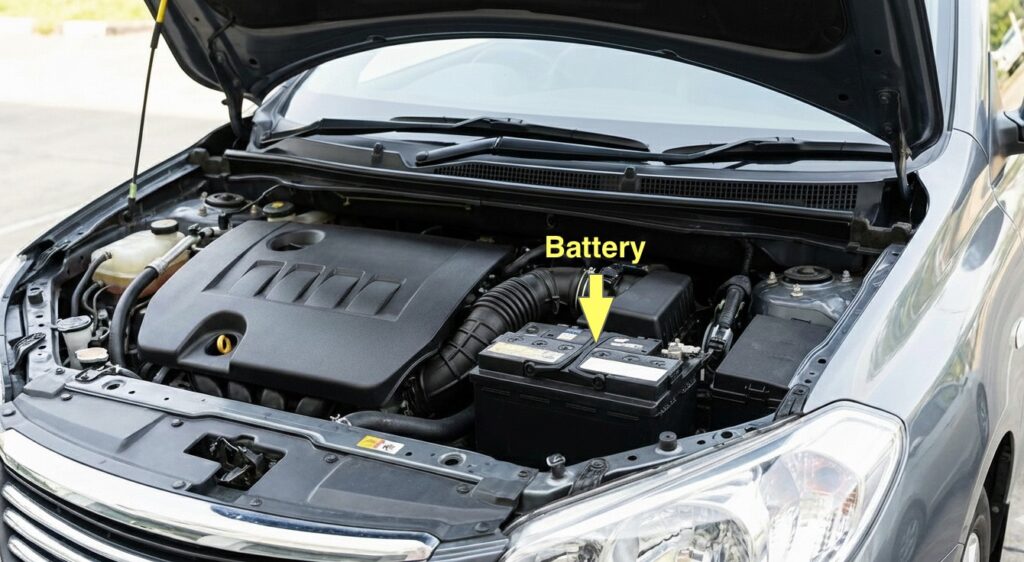
Ditch the Guesswork: Get a Load Test
A simple voltage reading—12.6 volts—only tells you that the battery is charged. It doesn’t tell you how well it can handle a demand.
That’s where the Load Test comes in. This is the gold standard for battery diagnostics. A mechanic or the folks at your local auto parts store can do this for you in minutes, often for free. The machine simulates the massive draw required to crank the engine, giving you a true picture of the battery’s health.
The key number to remember is around 9.6 volts. If the battery voltage drops below that threshold during the test, it’s considered weak and absolutely should be replaced before the temperature plummets.
Choose Control Over Crisis
We spend hundreds of dollars on things we don’t need every year. Replacing a battery that is showing its age is one of the cheapest forms of insurance you can buy.
Don’t wait for the click of death to force your hand. Check your records, check the label, and if your battery is approaching its fifth birthday, grab that free load test today. Peace of mind is priceless, especially when the snow starts falling.
If you need help locating a local tech to have your battery checked out, give Openbay a try. Openbay is a nationwide online platform that connects vehicle owners with a network of curated automotive service professionals that deliver quality service.